
 English
 Views: 9852 Author: phoenix Publish Time: 2023-03-10 Origin: Phoenix Breeding Equipment
Larger-scale commercial production as a more intensive chicken raising is different from backyard chicken raising. Therefore, to create a good environment for chickens, it is necessary to reasonably design and build a chicken house that is conducive to the growth of chickens. Chickens have no sweat glands and mainly rely on breathing to dissipate heat, its heat resistance is worse than its cold resistance. It likes a warm, cool, dry, fresh air, and quiet environment. For this reason, the chicken house should be built on higher terrain, with good ventilation, sufficient water, power, and convenient transportation. Dry noise, no pollution, easy to disinfect and isolate the place.
Chicken breeding equipment includes: heating equipment, ventilation equipment, water supply equipment, feeding equipment, egg collection equipment, feces cleaning equipment, cage, lighting equipment, etc.

1. Heating equipment
As long as the purpose of heating and heat preservation can be achieved, heating methods such as electric heating, water heating, and coal stove can be used. However, it should be noted that coal stove heating is dirty and prone to gas poisoning, and a chimney must be added. When designing the house, pay attention to heat insulation.
Closed chicken houses must adopt mechanical ventilation, which can be divided into horizontal ventilation and longitudinal ventilation according to the direction of air flow in the house. Horizontal ventilation means that the direction of air flow in the house is perpendicular to the long axis of the house, and longitudinal ventilation refers to a ventilation method in which a large number of fans are concentrated in one place so that the air flow in the house is parallel to the long axis of the house.
The research and practice since 1988 has proved that the effect of longitudinal ventilation is better, which can eliminate and overcome the dead angle of ventilation in the house and the phenomenon of small and uneven wind speed during horizontal ventilation, and at the same time eliminate the disadvantages of cross-infection between chicken houses caused by horizontal ventilation.
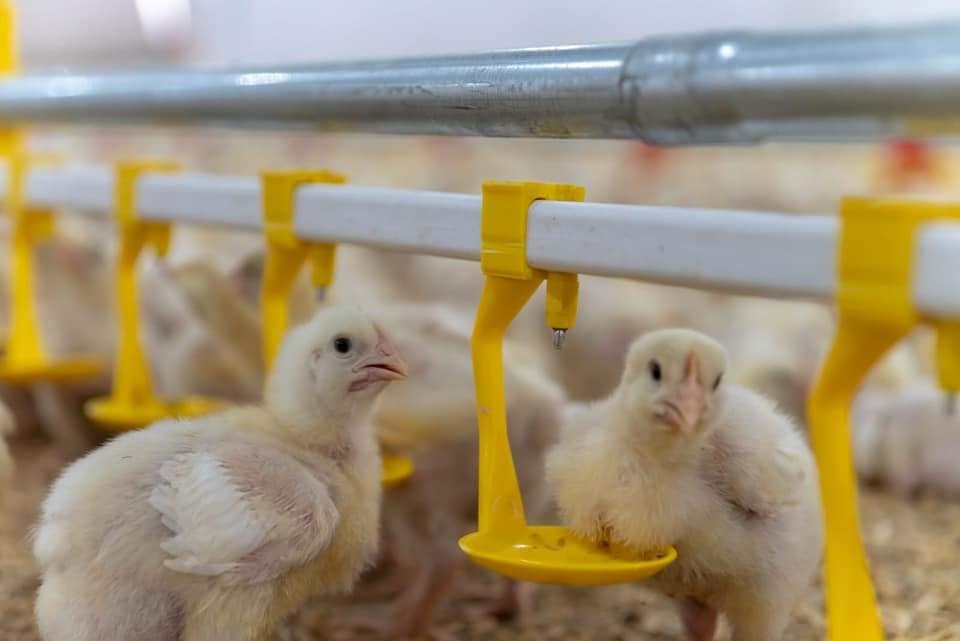
From the point of view of saving water and preventing bacterial contamination, nipple drinking fountains are the most ideal water supply equipment, and high-quality water-tight drinking fountains must be selected.
Now the most common way to raise chickens and laying hens in cages is the V-shaped sink, which is often supplied with running water, but it takes energy to clean the sink every day. The pendant-type automatic drinking fountain can be used when raising chicks on a flat floor, which is hygienic and water-saving.
Food troughs are mainly used, and long troughs are used for chickens in cages. This feeding method can also be used when raising broods flat, and can also be fed with hanging buckets. The shape of the trough has a great influence on the throwing of feed for the chickens. If the trough is too shallow and there is no edge protection, more feed will be wasted.

5. Egg collection equipment
Chicken farms with a high degree of mechanization use conveyor belts to automatically collect eggs, which has high efficiency but a high breakage rate. In October, most chicken farmers use manual egg collection.
6. Manure cleaning equipment
Generally, chicken farms use manual manure removal on a regular basis, and larger chicken farms can use mechanical manure removal.
7. Cage
Brooding can use mesh panels or three-dimensional multi-layer brooders; in addition to raising chickens on flat nets, they often use overlapping or stepped breeding cages, and farmers usually adopt 60-70-day-old direct transfer to laying hen cages. Production Laying hens are basically raised in cages. At present, there are many domestic manufacturers of chicken cages. You can choose according to the actual situation. The cage area of chickens must be guaranteed.
8. Lighting equipment
Common light bulbs are generally used for lighting in China, and the development trend is to use energy-saving lamps. Many chicken farms install timing automatic control switches to replace manual switches to ensure accurate and reliable lighting time.
Incubation equipment refers to the general term for the items needed in the hatching process, including: hatching machine, hatching machine, hatching machine accessories, special items for hatching room, heating equipment, humidifying equipment, and various measuring systems, etc.
10. Beak trimming equipment
Electric beak trimmer, electric soldering iron, etc.
To create a modern chicken farm, we must not only have modern chicken equipment, but also need a modern farming concept. Modern chicken raising equipment includes: heating equipment, ventilation equipment, water supply equipment, feeding equipment, egg collection equipment, manure cleaning equipment, cages, lighting equipment, etc.
The modern breeding concept includes: establish awareness of improved breeds, brooding is equally important, pay attention to daily management, strengthen disinfection, pay attention to feed quality and use less medicine, etc.
If you are looking for quality poultry equipment visit PHOENIX - they will cater to all your poultry farming needs.
For more agricultural products visit our directory.
 Cangzhou Phoenix Breeding Equipment Co., Ltd is a professional manufacturer and exporter that is concerned with the design, development and production of livestock breeding equipment. which can provide all kinds of poultry farm equipment, such as automatic feeding and drinking line, poultry nipple drinker, rabbit nipple drinker, poultry feeder, poultry drinkier, ventilation fan. Cooling pad , egg incubator,pvc pipe ,ss pipe etc. Check out our site to find the latest in poultry equipment. We hope you’ll fine the right products for you,, and how it allows you to scale up to the next level when you’re ready.
Whatsapp/Wechat:+86 18233772617